Business strategy: how to build a business that is easier to grow
Jun 25, 2026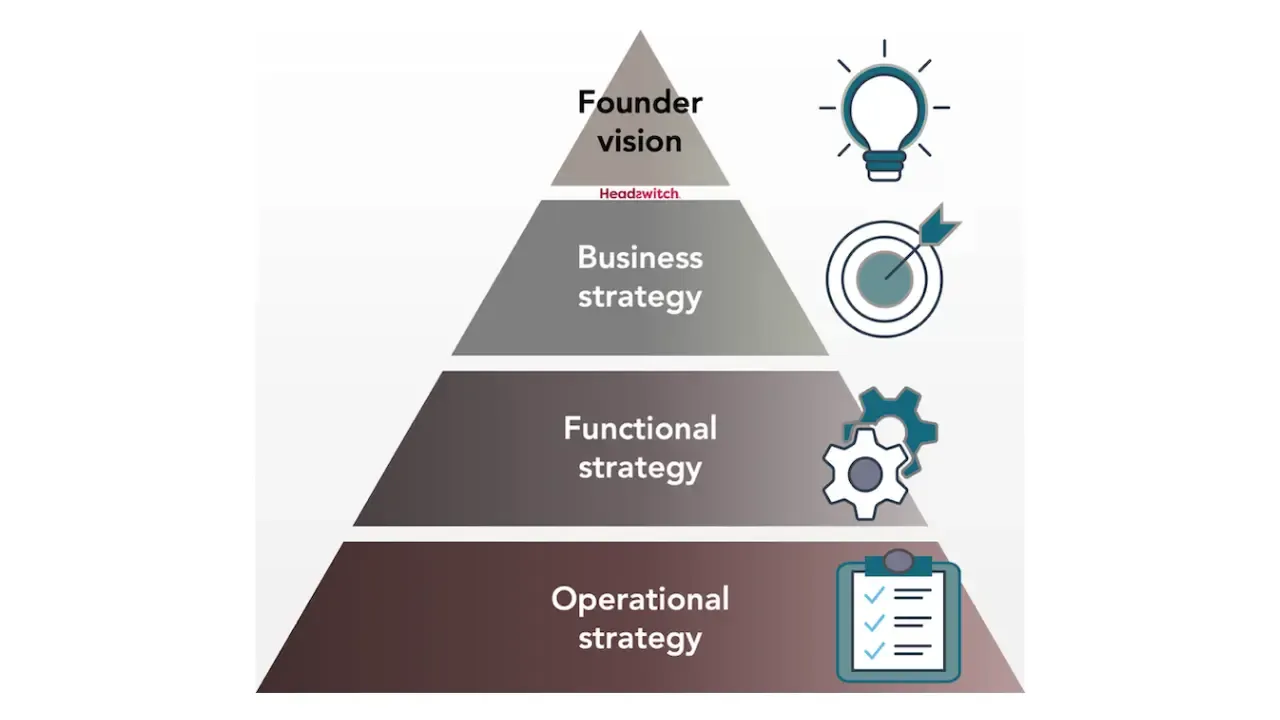
Author: Leanne Knowles
Read time: 5 minutes
A business without strategy can look busy, but something feels off.
The owner is making decisions. The team is doing the work. Customers are being served. Money is moving. New ideas keep getting added.
The founder doesn’t have clarity:
- The business is growing in pieces, not as one clear system.
- Marketing is saying one thing.
- Sales is chasing another.
- Delivery is held together by effort.
- The owner is still the backup plan for everything.
That is the problem business strategy is meant to solve.
Business strategy gives you a clear way to connect your vision, your market, your team, your systems and your daily decisions. It helps you stop building a cage and start building a business that can actually support the life and future you want.
What you’ll learn in this article
This article explains a simple strategy approach that helps business owners make clearer decisions and avoid expensive drift.
You will learn:
- Why business strategy needs more than one layer.
- How founder vision sets the direction.
- Why business strategy defines how you will win.
- How functional strategy keeps each part of the business aligned.
- Why operational strategy turns ideas into results.
- The benefits of using this approach.
- The risks of ignoring it.
Why business strategy needs layers
Business strategy works best when it connects the big picture to the day-to-day work.
Many business owners only focus on one layer.
- Some focus on the dream. They know what they want, but not how to build it.
- Some focus on the market. They know they need sales, but their offer, message and model are unclear.
- Some focus on operations. They build systems, but those systems are not connected to a clear direction.
That creates gaps.
A better approach is to think about business strategy in four connected layers:
- Founder vision.
- Business strategy.
- Functional strategy.
- Operational strategy.
Each layer has a job to do.
- Founder vision gives the business a north star.
- Business strategy defines how the business will win.
- Functional strategy aligns the key areas of the business.
- Operational strategy turns the plan into consistent action.
When these layers work together, the business becomes sharper, simpler and easier to grow.
Founder vision sets the direction
Your founder vision defines the deeper reason behind the business.
This is about more than money. It includes the legacy you want to leave, the life you want to live, the change you want to create, and the kind of work you want the business to support.
This matters because your business model should match your personal vision.
- If you want more freedom, you cannot build a business that depends on you for every decision, sale and delivery outcome.
- If you want to sell the business one day, you cannot keep all the value trapped in your head.
- If you want stronger profit, you cannot keep saying yes to low-margin work that drains the team.
Founder vision helps you make better decisions because it gives you a clear filter.
You can ask:
- Does this move me closer to the business I actually want?
- Or does this just add more pressure?
That one question can save you from a lot of expensive nonsense wearing a nice hat.
Business strategy defines how you will win
Business strategy is your game plan for winning in the market.
It answers the big practical questions:
- Who do we serve?
- What problem do we solve?
- Why should customers choose us?
- How will we make money?
- What will we be known for?
- What will we stop doing?
A strong business strategy forces you to make choices. That is the part many business owners avoid.
They want to keep all options open. Every customer. Every service. Every opportunity. Every new idea.
But too many options can weaken the business. You become harder to explain. Harder to buy from. Harder to manage. Harder to scale.
A clear business strategy helps you choose the right customers, the right offer, the right position and the right profit model.
It helps you stop chasing random growth and start building a business with a backbone.
Functional strategy keeps the business aligned
Functional strategy takes the main business strategy and applies it to each key part of the business. That includes marketing, sales, service delivery, finance, people, technology and customer experience.
This is where many growing businesses start to wobble.
Marketing is trying to attract one type of customer. Sales is accepting another. Delivery is customising everything. Finance is trying to clean up the mess. The owner is stuck in the middle, wondering why growth feels like wrestling an octopus.
Functional strategy stops each part of the business from making decisions in isolation.
It gives every area a clear role.
- Your marketing strategy should support your position.
- Your sales strategy should support your offer.
- Your delivery strategy should support your promise.
- Your financial strategy should support profit and cash flow.
- Your people strategy should support the way the business needs to grow.
- Your technology strategy should support efficiency, not create more digital clutter.
When each function is aligned, the business becomes easier to lead.
People know what matters. Priorities are clearer. Decisions are faster. Less energy is wasted on work that does not move the business forward.
Operational strategy turns ideas into results
Operational strategy is how the business runs.
It covers the systems, workflows, tools, processes, roles and rhythms that help the business deliver value consistently and profitably.
This is where strategy becomes real.
- A brilliant business idea is not enough.
- A strong offer is not enough.
- A clever brand is not enough.
If the business cannot deliver well without the owner constantly stepping in, the strategy is not fully built yet.
Operational strategy helps you answer:
- How do we deliver the promise?
- What steps need to happen every time?
- Who owns each part of the process?
- What can be automated?
- What can be delegated?
- What needs to be measured?
- What needs to be improved?
This is the layer that turns founder effort into business capability.
It helps the business stop relying on memory, guesswork and heroic last-minute saves.
That is where real freedom starts to show up.
The benefits of using this approach
A layered strategy approach gives the business more clarity, control and strength.
It helps you make better decisions because each layer supports the next.
- Founder vision keeps you honest about the business you are trying to build.
- Business strategy helps you choose where to compete and how to win.
- Functional strategy keeps your team and key activities aligned.
- Operational strategy turns the plan into repeatable action.
The benefits are practical.
- You get clearer priorities.
- You waste less time and money.
- You attract better-fit customers.
- You build stronger offers.
- You improve profit and cash flow.
- You reduce founder dependence.
- You make the business easier to manage.
- You create a better customer experience.
- You build a business with more long-term value.
The biggest benefit is that you stop building by accident.
You start building on purpose.
The risks of not using this approach
When these strategy layers are missing or disconnected, the business can become harder to run as it grows.
The first risk is drift.
Drift happens when the business keeps moving, but not in a clear direction. You keep adding more work, more offers, more tools and more decisions without checking whether they support the bigger picture.
The second risk is confusion.
If your strategy is unclear, your message becomes unclear. Customers do not understand why they should choose you. Team members do not know what to prioritise. The owner becomes the translator for everything.
The third risk is wasted effort.
Without a clear strategy, you can spend money on marketing, systems, staff, software and consultants without fixing the real problem.
The fourth risk is poor-fit growth.
You may attract customers who drain the business. You may sell offers that are hard to deliver. You may increase revenue while lowering profit. That is not growth. That is a louder problem.
The fifth risk is founder dependence.
When strategy is weak, the owner often becomes the glue. They make the key decisions, fix the delivery issues, hold the customer relationships and carry the hidden knowledge.
That might work for a while, but it is not sustainable. And it definitely is not freedom.
How to start applying this in your business
You do not need a massive strategy document to begin.
Start with better questions.
For founder vision, ask:
- What kind of business do I actually want to build?
- What do I want this business to make possible?
- What do I no longer want to carry?
For business strategy, ask:
- Who are we best placed to serve?
- What problem do we solve best?
- How do we make money in a way that is profitable and sustainable?
- What will we stop doing?
For functional strategy, ask:
- Do our marketing, sales, delivery, finance, people and systems support the same direction?
- Where are we working against ourselves?
For operational strategy, ask:
- What needs to be systemised?
- What needs to be simplified?
- What needs to be delegated?
- What still depends too much on me?
These questions will show you where the real gaps are.
Not the surface-level noise. The proper gaps.
The ones that are costing you time, money, energy and growth.
Build the business with intent
Business strategy is not a corporate luxury. It is a survival tool for small business owners who want to grow without losing themselves in the process.
When your founder vision, business strategy, functional strategy and operational strategy work together, the business becomes clearer and stronger.
- You stop making decisions from pressure.
- You stop chasing every opportunity.
- You stop building a business that needs you to hold the whole thing together.
Instead, you create a business with direction, structure and a better chance of growing beyond you.
That is the real job of strategy - not to make the business sound smart, but to make it work.
More articles about growing your business by increasing revenue and maintaining strong profit:
- Brand before marketing or get lost in the crowd
- Smart pricing for service pros: earn more without the stress
- How to get a freedom business
- 5 steps to choose your keyword driven brand name
- Build a brand that attracts more customers
About your author

Leanne Knowles knows her stuff when it comes to ditching the hustle and building a business that runs without you. Formerly stuck and stretched in her small business, Leanne developed a simple system to bottle your brilliance, and build a thriving, scalable business that can run without you.
Get the inside edge
Want cutting-edge strategies and step-by-step guidance to build a business that practically runs itself —paying you while you sleep? Get the inside edge now.
And don’t worry, your info stays safe. No spam, no inappropriate sharing, just game-changing insights.
We hate SPAM. We will never sell your information, for any reason.