How to build scalable growth that runs on autopilot
Jun 03, 2026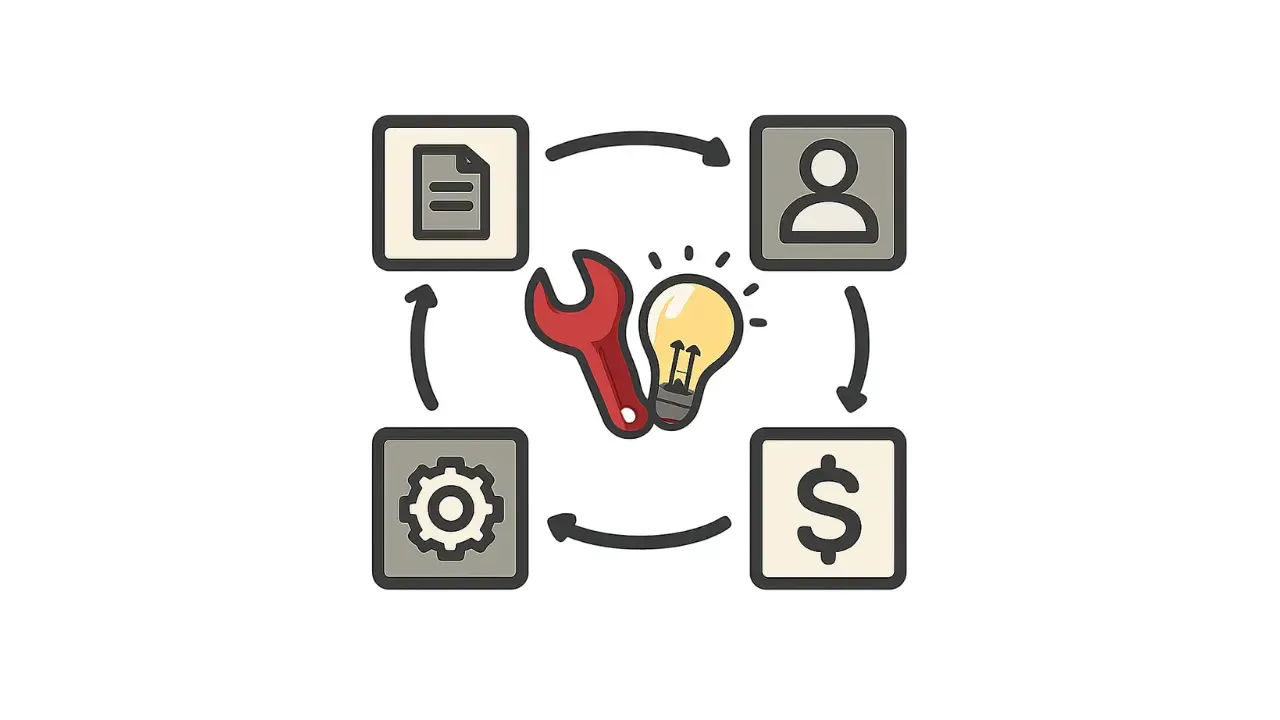
Author: Leanne Knowles
Read 3-4 minutes
Most founders never grow their business beyond the limits of their time and energy. If you're like most people in service business, you'll need a new model.
The business grows when you push. Sales happen when you chase. Delivery works when you check everything. Decisions move when you step in. Sound familiar?
On the outside, it looks like momentum.
Behind the scenes, it feels like carrying a fridge up a hill in thongs (for the Aussies) - or flip flops (for the Americans and others). That's a naughty little language trap that's should be cleared up before we move on.
Where were we? Or yes...
That is not scalable growth. That is founder-powered survival.
If you want a service business that can grow beyond you, you'll need more than motivation, marketing, or another random tactic. You need systems that turn your knowledge, ideas, offers, delivery, and decisions into repeatable business assets.
That is where scalable growth on autopilot begins.
What this article covers
This article breaks down the four core systems that help a service business grow without relying on constant founder input:
- The inspiration system: How you keep direction, energy, and momentum alive
- The IP system: How you turn your hidden brilliance into assets the business can sell and scale
- The growth system: How you build repeatable demand, sales, and traction
- Autonomous management: How you remove yourself from every tiny decision without dropping standards
Together, these systems help turn clarity into action, action into repeatable growth, and growth into a business that can run without you micromanaging every move.
The traditional service business model has a glitch
Service businesses are powerful because they are built on skill, trust, experience, and human value.
But that is also where the trap begins.
When the founder is the expert, the decision-maker, the salesperson, the delivery engine, and the quality controller, the business cannot scale cleanly. It can only stretch. And stretched founders eventually snap, stall, or start resenting the business they once loved.
The fix is not to work harder. That old trick is cooked.
The fix is to build the right systems around your expertise, so the business can create value without needing you in every conversation, client delivery, or decision.
1. The inspiration system
The inspiration system is the ignition switch.
It keeps energy, intent, and direction flowing so growth does not stall once the novelty wears off.
Every business needs a source of forward motion. Not hype. Not fake urgency. Not another motivational quote slapped onto a Canva tile. Real momentum comes from knowing where you are going, why it matters, and what needs to happen next.
Role it plays in success
The inspiration system turns ideas into action and keeps the business emotionally and strategically alive.
It helps you:
- Connect goals and insight into clear priorities and next actions
- Maintain momentum without relying on pressure or panic
- Align the founder, team, brand, and market around one clear direction
Without this system, founders drift. They chase shiny ideas, change direction too often, or lose energy because the business has no clear rhythm.
With it, growth has a pulse.
2. The IP system
The IP system is the value engine.
It turns your knowledge, experience, methods, frameworks, tools, and hidden brilliance into business assets that can be packaged, taught, licensed, delegated, automated, or sold.
This is the missing piece for many service business owners.
They have plenty of expertise, but it lives inside their head. Their best thinking comes out in client calls, custom projects, voice notes, workshops, and half-built frameworks. Useful? Yes. Scalable? Not yet.
To grow beyond yourself, your intellectual property needs to move from your brain into your business model.
That means turning what you know into clear assets like:
- Signature frameworks
- Diagnostic tools
- Step-by-step methods
- Productised services
- Training resources
- Templates and playbooks
- Repeatable client pathways
- Licensed or digital delivery models
This is where a service business starts to shift from selling founder time to selling structured value.
Role it plays in success
The IP system makes your expertise easier to sell, deliver, repeat, and scale.
It helps you:
- Capture your best thinking so it is not trapped in your head
- Turn custom service delivery into repeatable products, programs, or systems
- Create assets that can support recurring revenue, digital offers, licensing, training, and team delivery
- Make your value easier for buyers to understand and trust
- Reduce founder dependence by giving others a clear way to deliver your method
Without an IP system, growth usually means more clients, more calls, more custom work, and more pressure on the founder.
With an IP system, your expertise becomes a business asset. That is the jump from busy expert to scalable business owner.
3. The growth system
The growth system is the engine.
It is where traction is designed, measured, and multiplied instead of hoped for.
A lot of service business owners treat growth like a lucky accident. They post when they remember. Follow up when they panic. Launch when cash gets tight. Try new tactics when referrals slow down.
That is not a growth system. That is business bingo.
A proper growth system creates a clear path from visibility to trust, trust to enquiry, enquiry to sale, and sale to repeat value.
Role it plays in success
The growth system delivers predictable, repeatable growth without constant reinvention.
It helps you:
- Build demand through systems, not heroic effort
- Scale what works using data, feedback, and optimisation
- Reduce risk by testing, learning, and adjusting fast
For a service business, this may include content, partnerships, lead magnets, email nurture, webinars, sales calls, referral systems, SEO, paid traffic, or community building.
But the tools are not the magic. The system is.
The real win comes when your business has a repeatable way to attract the right people, show them the value, and move them towards a smart buying decision.
4. Autonomous management in action
Autonomous management is the autopilot.
It removes the founder from day-to-day decision fatigue while keeping standards high.
This does not mean the founder disappears or stops caring. It means the business no longer needs the founder to approve, explain, fix, check, chase, or rescue everything.
That is where freedom starts to get real.
Role it plays in success
Autonomous management protects founder freedom while the business keeps performing.
It helps you:
- Standardise decisions, delivery, and quality control
- Enable delegation, automation, and accountability
- Allow the business to run smoothly without founder dependence
This is where systems, people, processes, dashboards, decision rules, and automation all start working together.
The business becomes less reactive. The team becomes more confident. The founder gets space to lead instead of being dragged into every tiny operational fire.
Very glamorous? Not always.
Powerful? Absolutely.
Why these four systems work together
Scalable growth does not come from one clever tactic. It comes from stacking the right systems in the right order.
- The inspiration system gives the business direction and energy.
- The IP system turns expertise into assets.
- The growth system creates demand and traction.
- Autonomous management keeps the business running without founder bottlenecks.
When one of these is missing, the business feels harder than it should.
You may have energy but no structure. Expertise but no scalable offer. Marketing but no repeatable sales path. A team but no clear way for them to make decisions without you.
That is why the goal is not just to grow.
The goal is to grow in a way that gives you more time, more money, more self-expression, more legacy, and more freedom to choose what happens next.
How to start building scalable growth on autopilot
Start by asking one honest question: Where is the business still depending too much on me?
Then look at the four systems.
- If your energy is scattered, start with the inspiration system.
- If your expertise is trapped in your head, start with the IP system.
- If sales are inconsistent, start with the growth system.
- If everything still needs your approval, start with autonomous management.
You do not need to fix everything at once. You need to stop pretending founder hustle is a business model.
The real goal is not to build a business that looks impressive from the outside. The real goal is to build a service business that can grow, deliver, and make money without swallowing the founder whole. That is scalable growth on autopilot.
And yes, it is absolutely possible. But only when you stop being the engine and start building one.
More articles about growing your business by increasing revenue and maintaining strong profit:
- 5 ways to grow small business profit like a pro
- The 12 money levers: how to grow your profit without working more hours
- How to get more customers with a brand that actually stands out
- The perils of tactics without strategy that you need to consider
- How to upgrade your digital technology for business growth and scale
About your author

Leanne Knowles knows her stuff when it comes to ditching the hustle and building a business that runs without you. Formerly stuck and stretched in her small business, now the freedom strategist for founders who are over the grind and ready to scale like a boss, with systems, not burnout.
Get the inside edge
Want cutting-edge strategies and step-by-step guidance to build a business that practically runs itself —paying you while you sleep? Get the inside edge now.
And don’t worry, your info stays safe. No spam, no inappropriate sharing, just game-changing insights.
We hate SPAM. We will never sell your information, for any reason.