Purposeful business design: Build a business that pays you back
Jun 05, 2026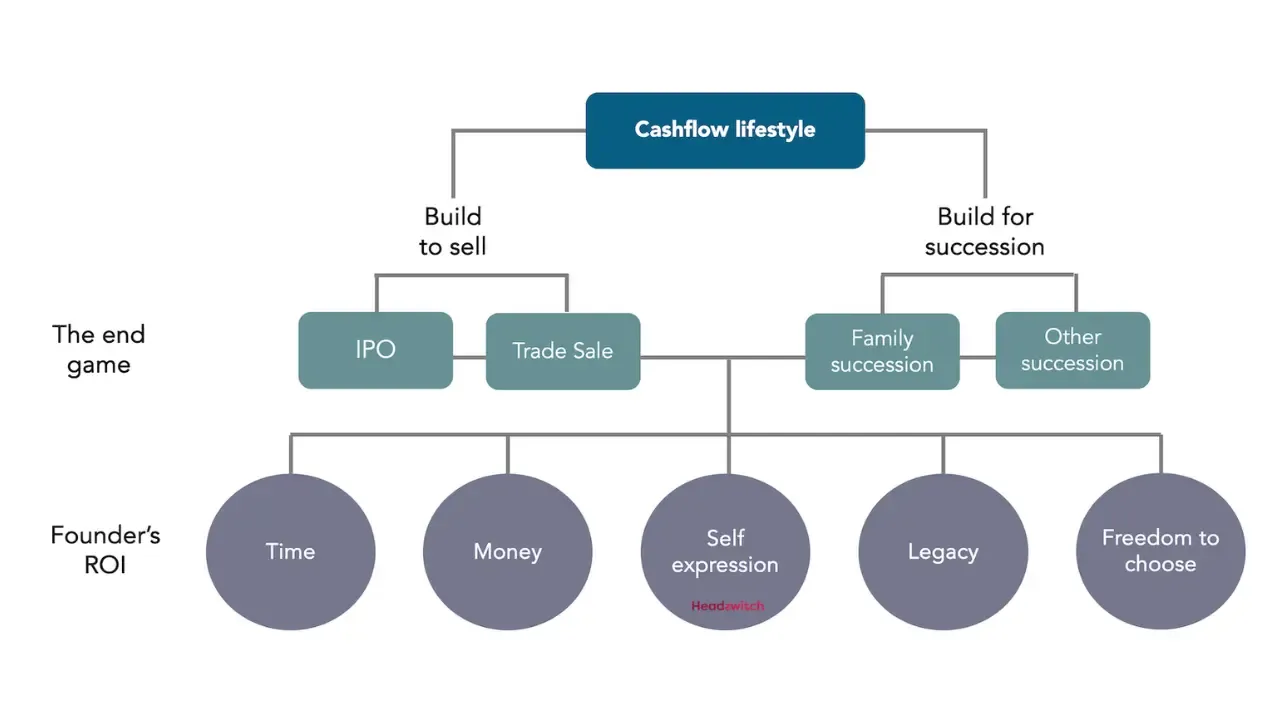
Most founders start with a service, a skill, or an idea. It’s easy to get started, but then it’s easy to get stuck.
Before they know it, the business starts growing around them like a wild garden with no fence, no path, and no clear way out. Clients arrive. Work piles up. The founder becomes the engine. The business makes money, but it also eats time, energy, choice, and sometimes sanity.
That is not business freedom. That is a job with better stationery, but more stress.
Purposeful business design flips the whole thing.
Instead of simply asking, “What can I sell?”, you also ask an equally vital question: “What do I want this business to give back to me?”
That is founder ROI.
This is not just about profit and revenue and being busy. Founder ROI means your business is designed to give you a return on your time, money, self-expression, legacy, and freedom to choose.
What you'll learn from this article
This article will show you how to think about your business by design, not default.
Here is the simple system:
- Define what founder ROI means to you
- Decide whether you are building for cashflow, lifestyle, sale, or succession
- Turn your knowledge, service, and IP into business assets
- Choose an end game before the business chooses one for you
- Use your business model to protect time, profit, legacy, and choice
The problem with building by default
Most business owners do not build a business on purpose.
They build one client at a time. One offer at a time. One problem at a time.
At first, that feels normal. You do the work. You make the money. You keep moving. But over time, the business becomes a machine that only works when you are inside it pulling every lever.
That creates a hard ceiling.
You can only work so many hours. You can only serve so many clients. You can only make so many decisions before your brain starts waving a tiny white flag.
This is where many founders get stuck.
They have a business that looks successful from the outside, but on the inside, it still depends too much on them.
Purposeful business design changes that. It helps you build a business that serves your life, not one that slowly takes it over.
Start with founder ROI
Founder ROI is the return your business gives back to you as the founder. It includes money, but money is not the whole story.
A business can make good revenue and still be a trap. You can have strong sales and still have no time. You can be booked out and still feel bored, boxed in, or burnt out.
That is why founder ROI needs to look at five things.
- Time is about whether the business gives you more space, or steals every spare minute.
- Money is about whether the business creates real profit, not just busy cash flow.
- Self-expression is about whether the business lets you do work that feels true to your strengths, values, and hidden brilliance.
- Legacy is about whether the business creates something that lasts beyond your daily effort.
- Freedom to choose is about whether you have options. You can grow, pause, sell, hand over, step back, or change direction without burning the whole thing down.
That is the real scorecard.
Because what is the point of building a business that wins on paper but costs you the life you wanted in the first place?
Choose the kind of business you are really building
Not every founder wants the same outcome.
- Some want strong cash flow.
- Some want a better lifestyle.
- Some want to build an asset they can sell.
- Some want to pass the business on to family, staff, or a future leader.
None of these paths are wrong.
The problem starts when you do not choose.
When you do not choose the end game, your daily decisions become messy. You say yes to the wrong work. You build offers that cannot scale. You price too low. You keep too much knowledge in your head. You delay systems because you are “too busy”, which is business code for “the wheels are wobbling but we’re still pretending it’s a race car.”
A purposeful business needs a clear direction.
You might be building for cashflow and lifestyle. That means the business needs to create reliable income without swallowing your calendar.
You might be building to sell. That means the business needs assets a buyer can value, such as systems, IP, brand, recurring revenue, team capability, and customer demand that does not depend on you.
You might be building for succession. That means the business needs leadership, structure, decision rules, and a clear pathway for someone else to run it.
Different end games need different business models.
That is why clarity matters.
Turn your IP into an asset
If you run a service business, your knowledge is often the gold.
The danger is that the gold stays trapped in your head.
You know how to solve the problem. You know what clients need. You know the patterns, the shortcuts, the red flags, and the smart way through.
But if that knowledge is not packaged, named, explained, taught, or systemised, the business still depends on you.
That is where your IP system matters.
Your IP system is the way you turn your hidden brilliance into a clear method, framework, process, product, or delivery system.
It helps you stop selling random hours and start selling repeatable value.
This can become a stronger offer. A digital product. A training program. A membership. A licence. A team delivery system. A diagnostic. A roadmap. A method that makes your business more valuable because it is not locked inside one person.
That is how a service business starts to shift from effort-based income to asset-based growth.
You are not just doing the work anymore.
You are building the engine.
Build for time, money, self-expression, legacy, and choice
A purposeful business should be judged by more than revenue.
Revenue tells you what came in, but it doesn't tell you what it truly cost. A better business gives you better returns across all five founder ROI measures.
- It gives you time because delivery is not always dependent on your direct labour.
- It gives you money because the model is profitable, priced properly, and built around repeatable value.
- It gives you self-expression because your strengths, style, and point of view are built into the brand and offers.
- It gives you legacy because the business becomes something other people can understand, use, trust, and carry forward.
- It gives you freedom to choose because you are not trapped by one income source, one delivery method, one type of client, or one founder-shaped bottleneck.
That is the real power of purposeful business design. It doesn't just help you grow. It helps you grow in a way you can actually live with.
Your end game should shape your daily decisions
The end game is not something you think about later.
It should shape what you build now.
- If you want to sell one day, you need more than good vibes and a busy calendar. You need a business that can work without you.
- If you want succession, you need people, systems, training, and leadership pathways.
- If you want lifestyle, you need boundaries, better offers, smart delivery, and cashflow that does not depend on constant hustle.
If you want legacy, you need your ideas, values, and method captured in a way others can follow.
Your end game is not a cage. It is a compass. It helps you make better decisions about offers, pricing, systems, hiring, marketing, delivery, and growth.
Without it, you are guessing. With it, you are designing.
Conclusion
Purposeful business design is about building a business with the founder’s return in mind from the start. Not just revenue, or growth, or looking impressive from the outside.
A good return on investment requires a well-designed business that gives you the time, money, self-expression, legacy, and freedom to choose, that works for you.
- It has a clear end game.
- It has a smarter model.
- It turns your knowledge into assets.
- It creates value beyond your personal effort.
That is the shift. You stop building a business that depends on you for everything. Then you start building a business that pays you back.
More articles about growing your business by increasing revenue and maintaining strong profit:
- 5 ways to grow small business profit like a pro
- The 12 money levers: how to grow your profit without working more hours
- How to get more customers with a brand that actually stands out
- The perils of tactics without strategy that you need to consider
- How to upgrade your digital technology for business growth and scale
About your author

Leanne Knowles knows her stuff when it comes to ditching the hustle and building a business that runs without you. Formerly stuck and stretched in her small business - now the freedom strategist for founders who are over the grind and ready to scale like a boss—with systems, not burnout.
Get the inside edge
Want cutting-edge strategies and step-by-step guidance to build a business that practically runs itself —paying you while you sleep? Get the inside edge now.
And don’t worry, your info stays safe. No spam, no inappropriate sharing, just game-changing insights.
We hate SPAM. We will never sell your information, for any reason.